The Music Supervisor on The Shards Was Handed a Playlist of 200 Songs Before She Started
Amanda Krieg Thomas had to fit a novel's worth of 1981 references into a television series, and the interesting work was finding the bands nobody remembers.
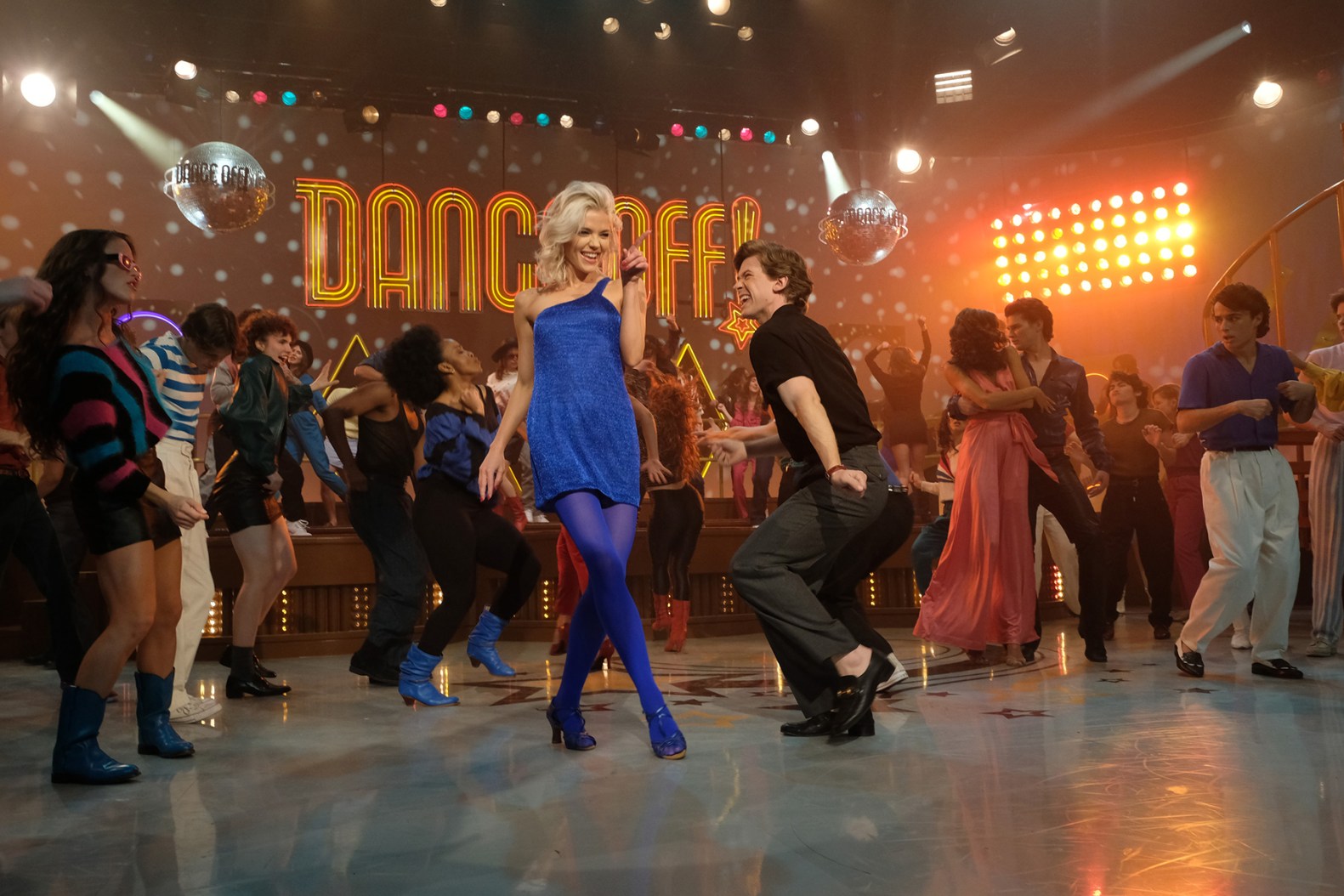
Ryan Murphy's new FX series The Shards arrived with an unusual amount of homework attached. Amanda Krieg Thomas, the music supervisor, is used to Murphy productions, having worked across Feud, American Horror Story, 9-1-1 and The Beauty. His shows tend to be built around music, sometimes as plot and sometimes as atmosphere.
This one came with an additional author.
A book that lists its own soundtrack
The series is co-created by Brett Easton Ellis, adapted from his autofictional novel of the same name, published in 2023. Ellis has always written music into his work, and it has carried into the films made from it.
The novel follows a teenage Brett Easton Ellis, played in the series by Igby Rigney, and a group of glamorous Los Angeles students entering their senior year in 1981. Among them are his old friend Susan Reynolds, played by Kaia Gerber, and a newcomer, Robert Mallory, played by Homer Gere. It draws loosely on Ellis's own experience of recognising his sexuality while writing his first novel, and then adds an invented serial killer preying on teenagers.
It is also stuffed with the music he was listening to at the time. Duran Duran. Blondie. REO Speedwagon.
"The book is just full of music," Thomas says. "I got the first few scripts, and then the next thing that was sent to me was a Spotify playlist of every artist and song mentioned in the book. And it's like 200 songs. It's so many songs."
The next thing sent to me was a playlist of every artist and song mentioned in the book
The songs that were not negotiable
Thomas has a method for a Murphy production, and it starts with the tracks written into the scripts themselves.
"We had to have Vienna by Ultravox," she says. "Definitely had to have Year of the Cat by Al Stewart. And we definitely had to have Funky Town."
The one that mattered most is more specific. Icehouse, by the Australian band Flowers, appears in the novel as a song Brett and Susan bond over, and Ellis returns to it more than once.
"How that got translated into the show is that song was written into a pivotal scene," Thomas says.
That is the difference between a period soundtrack and an adaptation. A song that a reader encountered as a passing reference has been converted into a piece of staging, which means it has to clear as a licence or the scene has to change.
The part she actually enjoys
Much of the series is scored by Morgan Kibby and David Klotz, whose synth compositions supply the unease, with new material from Troye Sivan. Thomas's own remit was the rest: the songs nobody expects.
"People have been making music forever, and a lot of it does not get on the charts," she says. Among the acts she worked into the show are Robin Lane and the Chartbusters, Gleaming Spires, and Trout Fishing in America.
"So that process is always really fun, to go digging, especially for the little bands."
There is a practical advantage to it as well. Smaller acts are not licensed often, and Thomas has found that the response when they are is entirely different from dealing with a catalogue holder.
"All these uses become so meaningful to them," she says.
Why the obscure choices carry the period
A show set in 1981 that runs only on the hits will sound like a compilation album rather than a year.
The recognisable tracks do a specific job, which is telling the audience where they are. The unknown ones do the harder one, which is making the world feel like somewhere people actually lived, with a radio playing something that never became a standard.
A playlist of 200 songs is a constraint disguised as a gift. What Thomas seems to have worked out is that the assignment was never to use all of it. It was to establish the period with the famous handful, and then fill the remaining space with music the audience has no memory attached to.
More from Talent
Jodie Comer Is Singing in a Taxidermy Musical, and It Premiered at Toronto This Week
Stuffed asks an audience to accept a romance conducted through the preservation of a human body, set to Broadway balladry, in a working-class…
Edinburgh Gets a Connery Institute, and an Address Still to Be Found
The National Film and Television School and the Sean Connery Foundation have committed to a permanent Scottish headquarters in central Edinburgh…

DreamWorks built a studio movie out of Philippine folklore, then opened it in the Philippines first
Forgotten Island reaches Philippine cinemas on 23 September 2026 and United States cinemas two days later, with a government tourism board, a…