Alex Gibney Spent Four Hours on Elon Musk and Saved the Worst Line for the End
The documentary premiered at Venice this week, and the sentence most likely to stay with you comes from the mother of one of Musk's children.
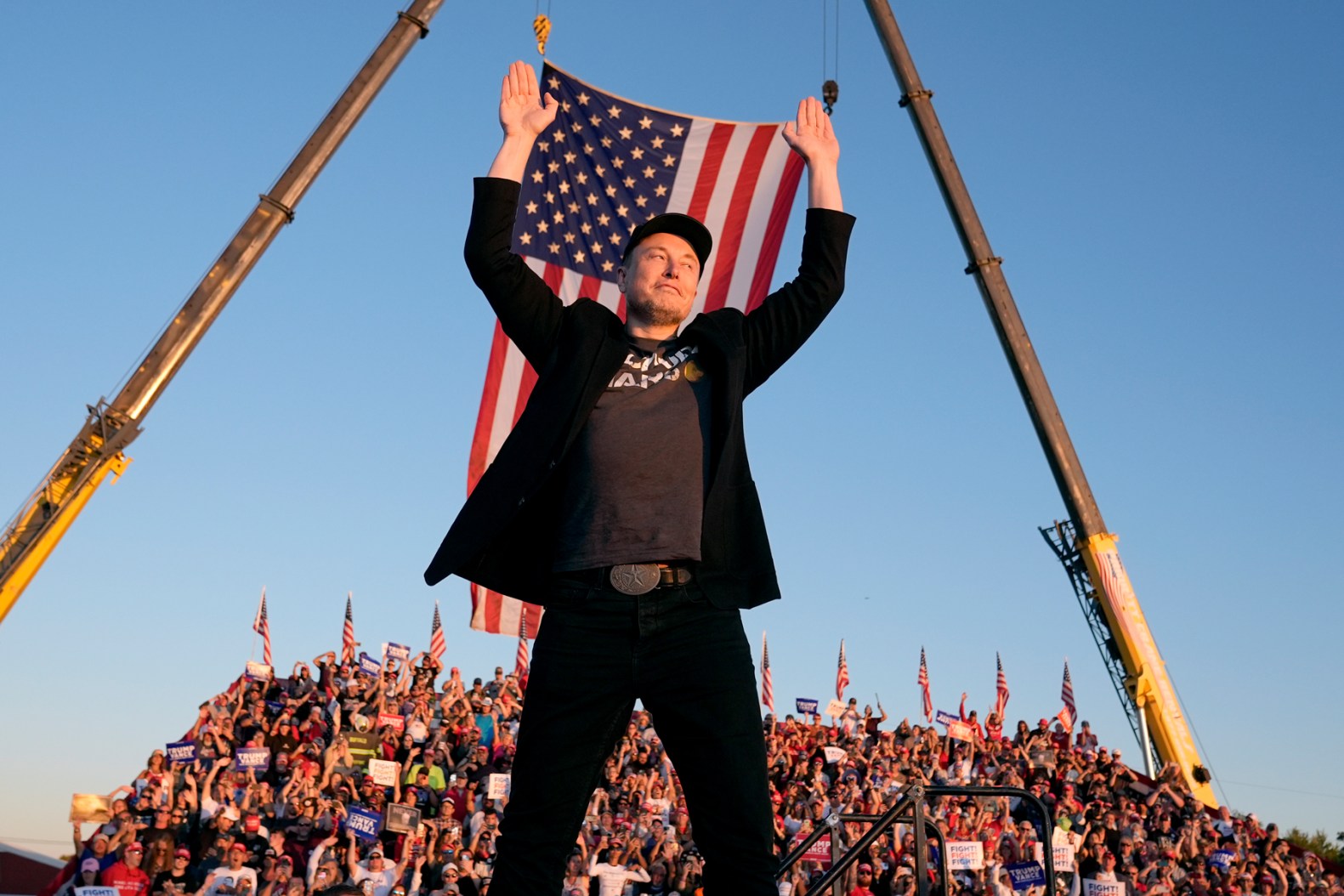
Alex Gibney's Musk is two parts and four hours long. It premiered at the Venice Film Festival on September 8, plays Toronto next week and opens in cinemas on October 16.
The line the film is built towards belongs to Ashley St. Clair, the right-wing influencer who entered Musk's orbit and later had one of his children.
"Elon is a nuke," she says.
Placed early, that would read as a producer's pull quote. Gibney puts it near the end of four hours, after the case has been laid out, and by then it does not sound like hyperbole.
He wanted to be called an engineer
The film's most useful stretch is the beginning, because it takes seriously a version of Musk that has almost disappeared from public argument about him.
He preferred to be known as an engineer. Not a chief executive, not an industry titan. His business cards said engineer. One employee describes him as a genuinely good one, with a qualification attached: not an educated engineer. After he became wealthy and famous he kept wearing T-shirts and jeans to the office, specifically so he would look the part.
He belonged to the Silicon Valley cohort that moved fast and broke things, riding the internet's unregulated period into the new century and making very large deals along the way. But the self-image he wanted was builder. Someone who turned ideas about a better world into objects.
The Tony Stark comparison came later, and he made it himself: part playboy, part savant, part superhero. The descriptions that followed came from admirers, lovers, critics, executives and occasionally his own account of himself. Genius. Grifter. Disruptor. The embodiment of capitalism. Pathological liar. Plutocrat. Broligarch.
Most portraits give you a sketch of the subject. This one is built to unsettle you
The film Gibney did not originally intend to make
Musk called the project a hit job when it was announced in 2023, and called Gibney an insult on the platform he had just bought and renamed. Gibney answered with a one-word pun and moved on.
He has said he never set out to make a hit job, and that he had not planned an account this long. The scope changed when Musk moved into politics and began listing the 2024 election among his accomplishments.
You can see the seam. There is a version of this documentary that stops at the midpoint and is a reasonably conventional ascent story: a South African immigrant goes from an awkward startup founder to an electric vehicle manufacturer, to a space company, to the kind of technology celebrity who gets to host Saturday Night Live.
That half is not hostile. The film credits what Tesla, SpaceX and Starlink actually achieved, and credits Musk's ability to push capable people into producing genuine breakthroughs.
It also documents the other habit. The claim that a Tesla battery could be swapped faster than a conventional car could be refuelled. The characterisation of autopilot as essentially foolproof. Things asserted with total confidence that were not true.
Where the second half goes
The reason the film runs to four hours is that Gibney decided the ascent is no longer the story.
What the back half deals with is the accumulation of money, power and influence, and then the use of all three in service of an agenda that has moved past self-preservation and enrichment into something more expansive and less bounded.
That is the shift St. Clair's line is describing. Not that Musk is unpleasant, or erratic, or dishonest about battery swaps. That the quantity of leverage now concentrated in one unpredictable person constitutes a category of risk in itself.
What kind of film it is
Most portraits of a living subject offer a sketch and leave the audience to judge. This one is assembled as a case, and it is designed to unsettle you rather than to explain him.
Whether that is the correct register depends on how you read the last two years. If you think Musk is a talented, chaotic industrialist who wandered into politics, four hours is far too long. If you think the concentration of that much capability in one person is the actual story of the decade, it is arguably not long enough.
Gibney has clearly decided which of those he believes. The film does not pretend otherwise, and it does not put the loudest line first.
More from Talent
Jodie Comer Is Singing in a Taxidermy Musical, and It Premiered at Toronto This Week
Stuffed asks an audience to accept a romance conducted through the preservation of a human body, set to Broadway balladry, in a working-class…
Edinburgh Gets a Connery Institute, and an Address Still to Be Found
The National Film and Television School and the Sean Connery Foundation have committed to a permanent Scottish headquarters in central Edinburgh…

DreamWorks built a studio movie out of Philippine folklore, then opened it in the Philippines first
Forgotten Island reaches Philippine cinemas on 23 September 2026 and United States cinemas two days later, with a government tourism board, a…