Marks and Spencer Walked London Fashion Week and Had the Whole Rail on Sale by Teatime
Marks and Spencer took its first slot on the official London Fashion Week schedule on 18 September 2026 and sold the collection off the runway the same day, four months after telling the market its fashion profit had more than halved.
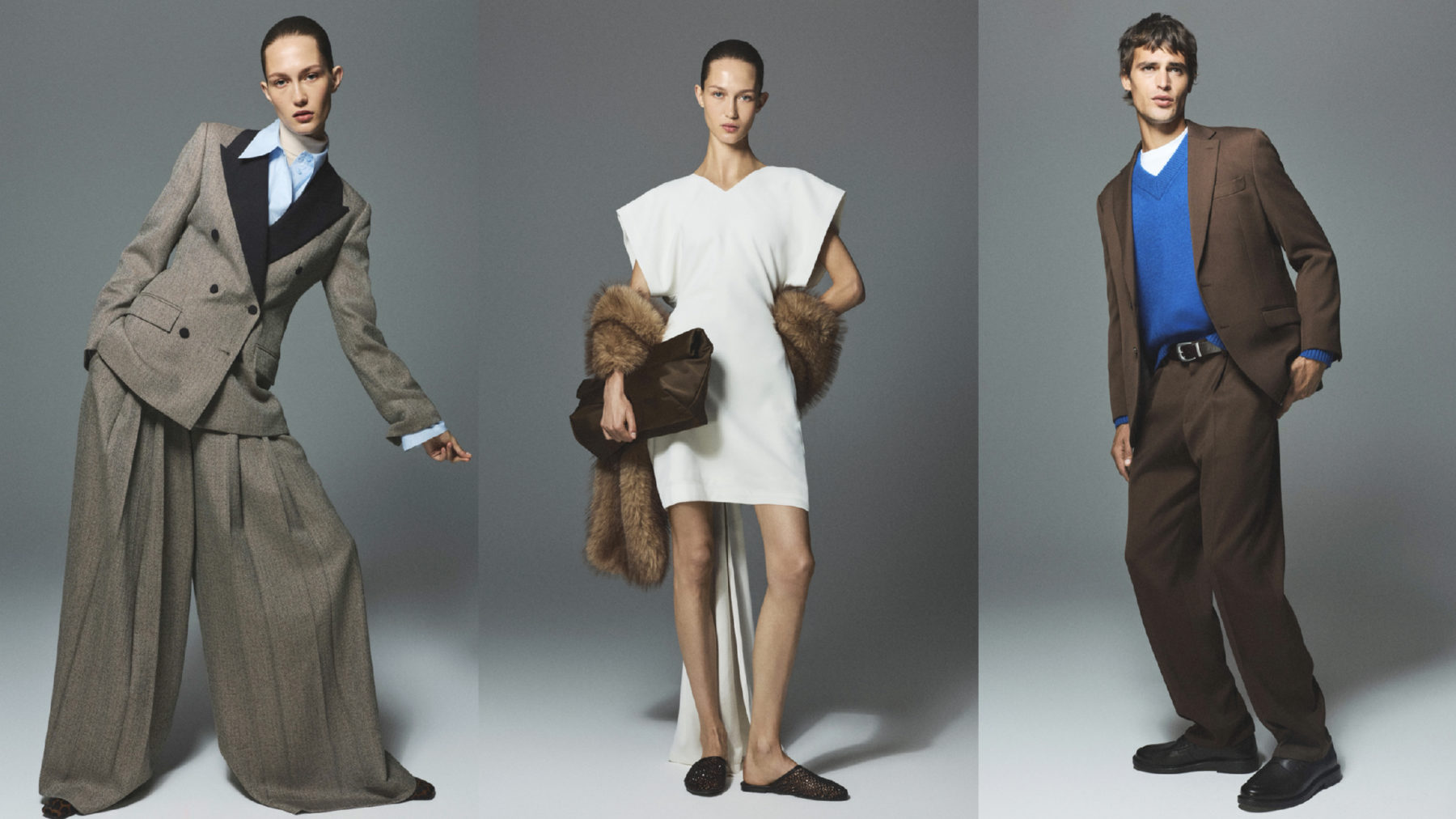
The show ran at noon at the Design Museum in London, womenswear and menswear, designed entirely in-house. It was staged as "see now, buy now": the moment the last look cleared the runway the clothes went live online and onto the rails of ten flagship stores across the UK and Ireland, Marble Arch and Grafton Street among them. No six-month wait, no pre-order, no wholesale window.
It is the first catwalk show in the retailer's history, according to the company's release of 18 September, which frames the exercise as a centenary: one hundred years since M&S started selling clothes.
"This is a collection built on our heritage but brought bang up to date. From our tan leather borg jacket inspired by a heritage St Michael design to our black tuxedo suit and crisp white shirt like the ones worn by Christy Turlington for M&S in the '90s. In menswear, our dry-wax car coat, Japanese selvedge denim, heritage-check outerwear and 1980s style velvet tailoring are inspired by our archive but designed for today," Stuart Machin, chief executive at M&S, said in the release.
The company cannot agree with itself on how many looks walked
Read the release end to end and it gives three different answers. The bullet summary at the top refers to "the 57 runway looks available to shop immediately". The body says "all 59 looks will be available to buy immediately". The notes to editors break it down as 41 womenswear looks and 16 menswear looks, which is 57. The company reconciles the three figures nowhere in the document. The arithmetic in its own notes supports 57, and 59 sits there unexplained.
The pricing claim is easier to check, so it was checked against the shop's own pages. The release says half the collection is priced under fifty pounds. The retailer's 100 Years of Fashion event pages for womenswear and menswear carry 214 distinct listings, of which 105 are priced below £50 — 49.1 per cent, which squares with the claim. The cheapest is £6.00, the dearest £450.00, an Autograph pure leather longline coat in chocolate.
The event pages do not label which listings actually walked, and there are 214 of them against 57 looks, so the matches are matches by name. Those sit in the middle of the range, not the bottom. The Japanese selvedge jeans are £65.00, the matching denim jacket £90.00. The wool-blend contrast-collar car coat is £120.00, the same as the velvet suit jacket in bitter chocolate, with its trousers another £70.00. The leather shearling-collar bomber is £349.00. On the womenswear side the tuxedo jacket is £85.00 with the relaxed straight-leg trousers at £50.00, and the white shirt that goes under it — the Turlington reference — is £28.00.
Why a high-street retailer buys a place on a designer schedule
The show's own framing is a victory lap. The company's most recent results statement is not.
In its preliminary results for the 52 weeks ended 28 March 2026, issued on 20 May 2026 under the headline "Reinvesting for Growth", M&S reported that Fashion, Home and Beauty sales declined by 7.7 per cent to £3.9bn, and that adjusted operating profit in the division fell 55.4 per cent to £213.4m, down from £478.0m, on a margin of 5.5 per cent. The statement attributes the decline to a temporary pause in online trading and systems access that disrupted stock flow and restricted availability, and to markdown and clearance of excess seasonal stock. Store sales in the division fell 2.3 per cent to £2,749.8m, returning to growth in the final quarter.
A runway show that ends in a checkout is a plausible answer to that. So is the plumbing around it: the show streamed on Zalando's Live Hub across France, Germany, the Netherlands and Poland, an audience the company says is potentially double its loyal customer base across its global markets, with the collection selling through its 46 direct-to-consumer websites.
Our ambition is to serve customers better, grow online profitably and build a Fashion, Home and Beauty business for the next 100 years and beyond
That is John Lyttle, managing director of Fashion, Home and Beauty at M&S, in the same release, where he also said the show "reflects the progress we have made, but it is not an end point."
One number that only exists in the show release
The release states that in FY26 the company held 10.2 per cent of the fashion market, alongside a 16 per cent year-on-year increase in under-35s shopping the brand. That market share figure appears nowhere in the results statement, which says only that the cyber incident resulted in reduced sales and market share. The 10.2 per cent is a single-source company claim, made in a document announcing a fashion show, with no stated measurement basis.
The schedule placement is its own quiet tell. When the British Fashion Council published the provisional September schedule on 20 July 2026, it did not file M&S among the designers. It grouped the retailer under what it called the growing role of retail and consumer engagement within the week, alongside a jewellery showcase from Dover Street Market, an H&M project with photographer Nick Knight, a shoppable pre-loved runway from eBay, and in-store highlights from Selfridges. The council's official partners are named separately on the same release, and M&S is not among them. Neither organisation says whether a retail brand on the schedule pays a fee, is a commercial partner, or comes in on the terms a designer house does.
The centenary is of the clothes, not of the company
Worth being precise about, because the release is: the hundred years being marked are a hundred years of M&S selling clothing, not a hundred years of M&S. The release says the business moved into clothing "from drapery and haberdashery" in 1926, with ready-made pullovers, petticoats and underwear — which places the company itself well before the anniversary it is throwing. The company's own archive timeline, held at the University of Leeds, says the same thing: "We started selling clothing in 1926, as the demand for quality, ready-to-wear clothing increased." That archive, more than 72,000 items deep, seeded the collection, though only three products are drawn directly from archive pieces.
A good deal is still unestablished. The company has not said whether the collection is a permanent range or a one-off drop, and gives no end date, no stock quantity and no reorder position. It names no stylist, no casting director, no producer and no model, crediting only its 116 in-house designers collectively. There is no attendance figure, no production cost and no first-day sales number, and no statement that it intends to return to the schedule next season.
More from Style
Venice, Fashion Week and a Secret Brad Pitt Screening: The September Diary
Awards season opened on the Lido while New York ran fashion week in parallel, and the month's two busiest rooms were four thousand miles apart.
Kelly Osbourne Wore Vivienne Westwood to the NTAs, Days After Describing What Grief Did to Her
She was on the red carpet on Tuesday in blue plaid and a slicked-back updo, having spoken that weekend about weight she lost while her father was…
Martha Stewart Has Made the Case Against Black Trousers, in Burgundy
She wore wine-coloured wide-leg pleats to the US Open with a matching bomber, and the effect is the argument.