The Bowie recordings the estate does not own
Twenty-two songs David Bowie cut in London in 1965 reached streaming services last week, and the copyright on them belongs to a dead producer's company rather than to the artist's estate or to Warner Music.
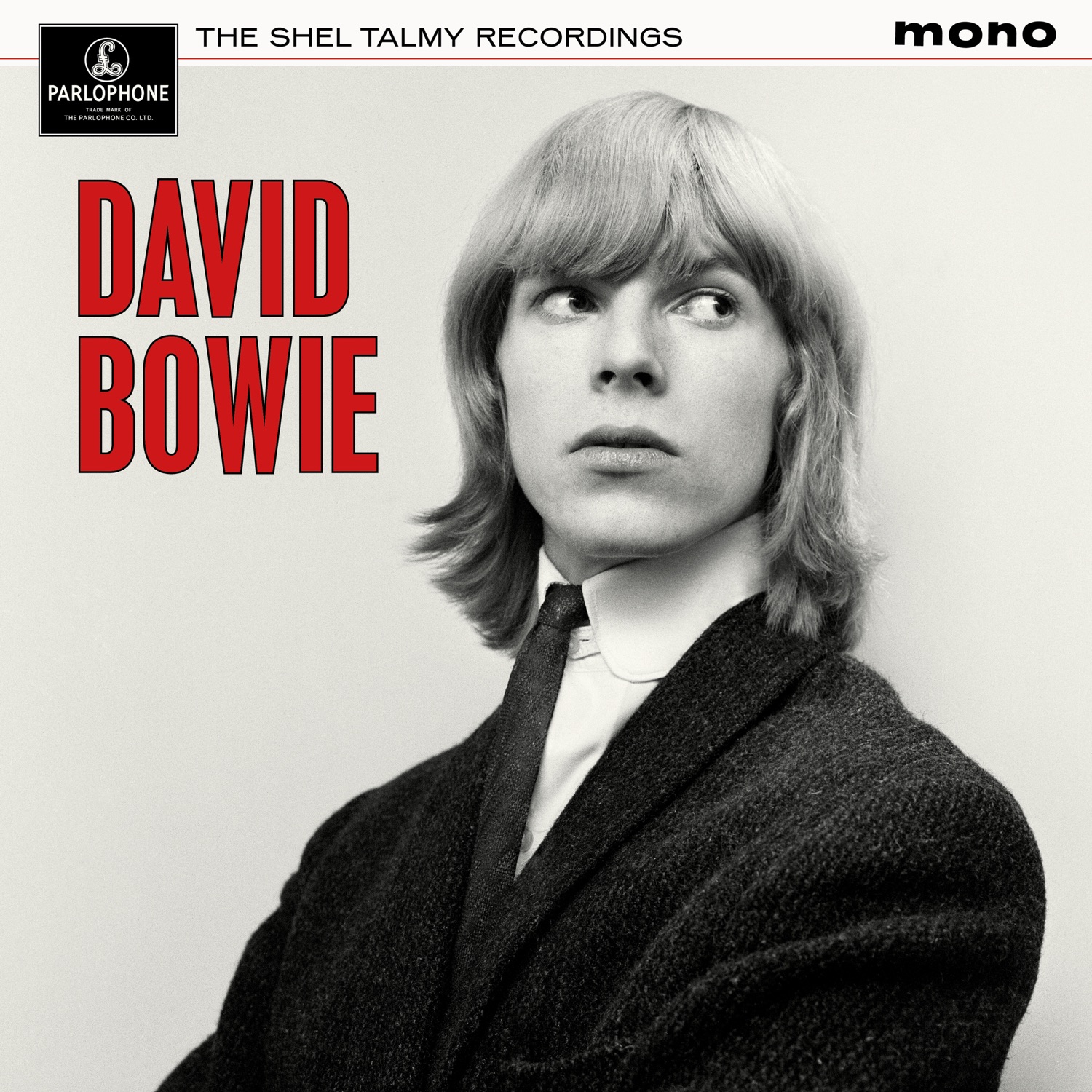
On 18 September 2026 Parlophone Records issued DAVID BOWIE — THE SHEL TALMY RECORDINGS, a 22-track mono compilation of what the then-19-year-old Davie Jones recorded between January and August 1965 with the American producer Shel Talmy. Ten of the 22 tracks had never been released in any form. It is the first time the 1965 Talmy masters have been available to stream.
The interesting part is not the archive but the small grey type underneath it. The copyright line carried on every digital storefront reads: "This compilation, under exclusive license to Parlophone Records Limited, ℗ 2026 Talmy Enterprises Inc". The transcribed sleeve credits say the same thing at greater length, naming Talmy Enterprises, Inc as both phonographic copyright and copyright holder, and Parlophone Records Ltd. as "Licensed To". WMIS Limited, Warner Music Group Germany Holding GmbH and Warner Music Group appear on the packaging as record companies, but the holder the packaging names is Talmy Enterprises, and the role it gives Parlophone is licensee. That company belonged to a producer who died in November 2024, nearly two years before the record came out.
That is not an accident of paperwork, it is how Talmy worked. He founded his own production company, Orbit-Universal, kept control of his master archive across his career, and sued The Who's management for breach of contract over his productions, and won. Orbit Music Co. Ltd., his own publishing vehicle, is one of the four publishers listed on the CD. He produced The Kinks' first seven albums and early Who singles, and he held on to the tapes.
Four years on one copyright line
Set that against what the estate has done with everything it does control. Bowie's songwriting catalogue went to Warner Chappell in January 2022, reported at around $250m, and Warner Music took on the recorded catalogue from 2023. The 1965 sessions were never in either pile.
The CD's copyright notice carries four years rather than one: "℗ and © 1965, 1991, 2017, 2026". Each is a date on which a different tranche of the same sessions first reached the public. 1965 is the original Parlophone singles. 1991 is the Rhino compilation Early On (1964–1966), which already pulled five unreleased songs out of Talmy's collection thirty-five years ago. 2017 is a single alternative take that surfaced on Talmy's own career retrospective, Making Time – A Shel Talmy Production. 2026 is this.
The per-track dates transcribed from the vinyl sleeve make the layering legible side by side. On Side 1, tracks 1 to 3 and track 5 carry ℗ 1965; tracks 4 and 6 carry ℗ 1991. The whole of Side 2 carries ℗ 2026. One side of the record is history being reissued. The other side is material being published for the first time.
No reason has been given
The record was assembled by the archivist Alec Palao, credited as compilation producer, transfer engineer, restorer and author of the liner notes. Five of the unreleased tracks are said to have come off a 12-inch acetate marked "Davie Jones" that he found while working through Talmy's archive about a decade ago, with a further five surfacing in his later research. That account of the discovery appears in no label or estate document.
What those documents do not do is explain why the material sat unreleased. Neither the Parlophone press release nor anything on davidbowie.com gives a reason, names a dispute or describes an expired licence. The packaging also claims a 2026 phonographic copyright on recordings made sixty-one years ago without stating the basis for it.
What the sessions were is better documented. Talmy signed Bowie and The Manish Boys in December 1964, and the credits name three London rooms — I.B.C., Central Sound and Regent Sound. IBC in Portland Place was Talmy's studio of choice, with Glyn Johns engineering and Nicky Hopkins on keyboards for The Lower Third's date there. Jimmy Page, then a session guitarist for hire and years from Led Zeppelin, played on the sessions and, the release says, brought a custom-built fuzz pedal to add bite to Talmy's thinner acts. By the end of September 1965 Davie Jones had become David Bowie.
"I thought he absolutely was going to make it. The only unfortunate thing is that he and I were about six years ahead of the market." — Shel Talmy, speaking in 2017, quoted in the Parlophone release
Two things the desk checked
The "first time on streaming" claim holds up. A catalogue search of the US Apple Music and iTunes storefront by this desk on 21 September 2026 found no listing at all for Early On (1964–1966), the 1991 compilation that previously carried some of this material. A search for "You've Got A Habit Of Leaving" returned only the 2000-vintage TOY re-recording and its variants, with no 1965 original, and a search for Bowie and "I Pity The Fool" returned no 1965 Manish Boys recording at all.
The announcement and the record do not match. The press release of 15 July printed a CD track list of 21 titles and a vinyl Side One of five. The record that shipped carries 22 tracks, with "Glad I've Got Nobody (2026 Remaster)" at CD and digital track 12 and at vinyl A6 — a title named nowhere in the July announcement. That is the desk's own comparison of the July list against the Apple Music track listing and the transcribed vinyl sleeve credits, both retrieved on 21 September 2026. The July text itself referred to "the twenty-two songs featured here", so it was the printed list that was short, not the record.
What is still missing
Nobody from the estate, Parlophone or Warner is quoted anywhere in the primary documents. The only voices on the release are Talmy, from 2017, and Palao in the sleeve notes.
"It is invariably tempting to search for clues in an artist's tentative beginnings, and Bowie's juvenilia has been dissected more than most, but this has rarely been done within the proper context. The sounds here should not be judged by the standards of his later career, but by the standards of what was happening in Britain at that precise point in time." — Alec Palao, sleeve notes
One absence is worth naming on its own. No photographer is credited anywhere for either of the two 1965 cover photographs — not on the estate site, not on the shop listings, not in the transcribed sleeve credits, which find room for a masterer, a restorer and a compiler. For an artist whose image is normally licensed to the inch, that is a strange gap.
First-week sales, chart position and streaming counts were not available as of 21 September 2026. Nor is it known whether more Talmy-held Bowie material remains unissued; the release calls this the most complete collection, and stops short of calling it exhaustive.
More from News

A Netflix Caption, an Anniversary, and a Row That Was Always Going to Happen
A six-word promotional post about a television drama landed on the first anniversary of Charlie Kirk's killing, and the streamer now says any…

An Hour's Notice: The Letter That Redrew the Sussex Homecoming
A letter issued on King Charles's behalf has fixed Prince Harry and Meghan Markle's return to Britain as a strictly private one, and the couple's…